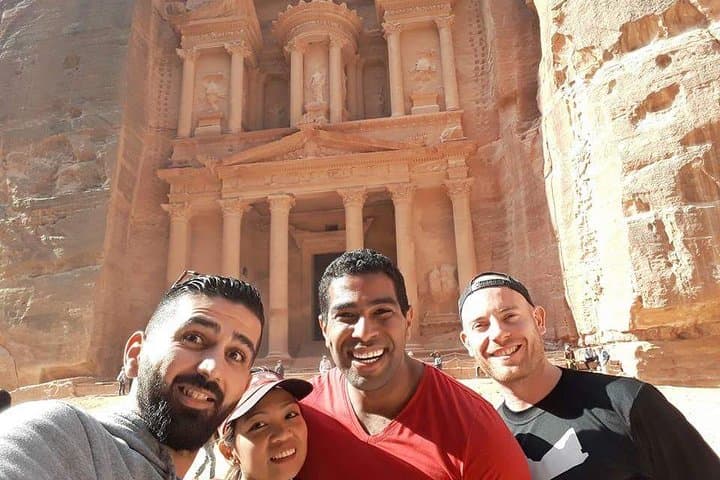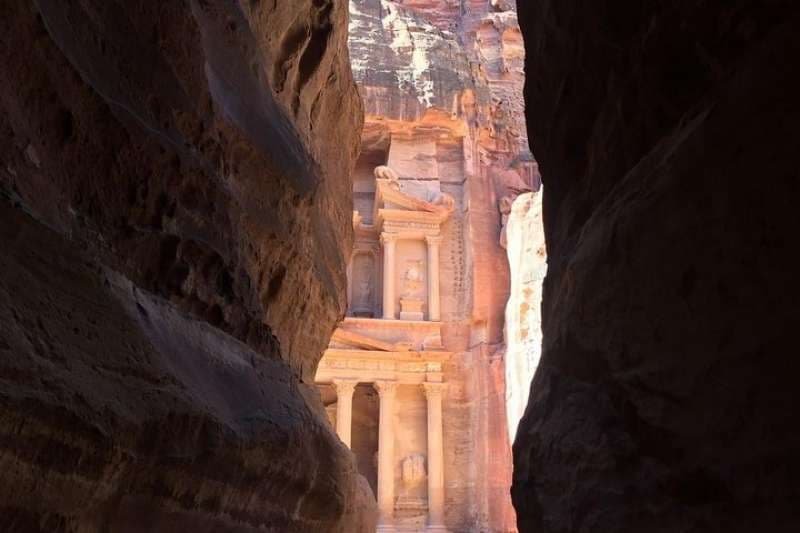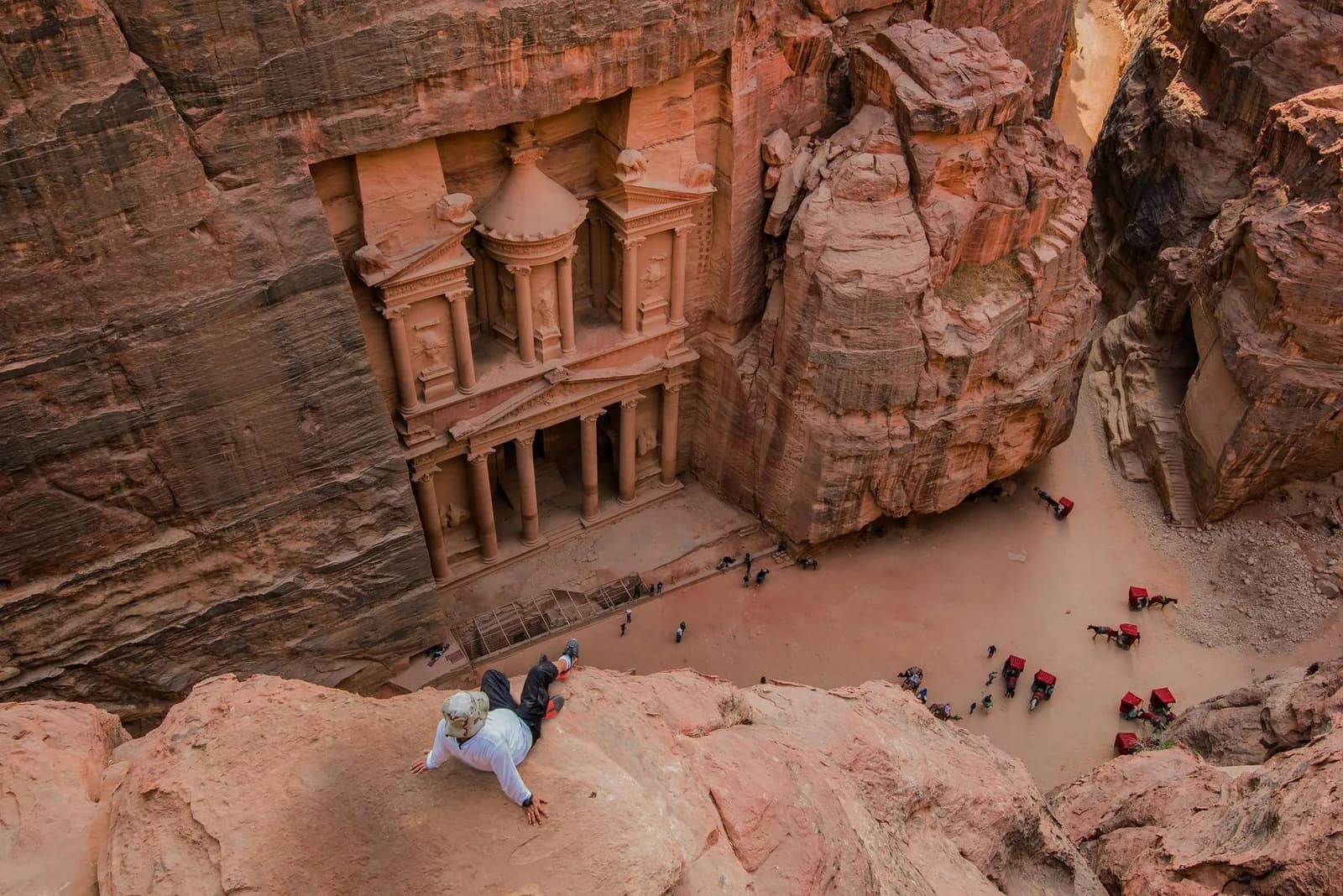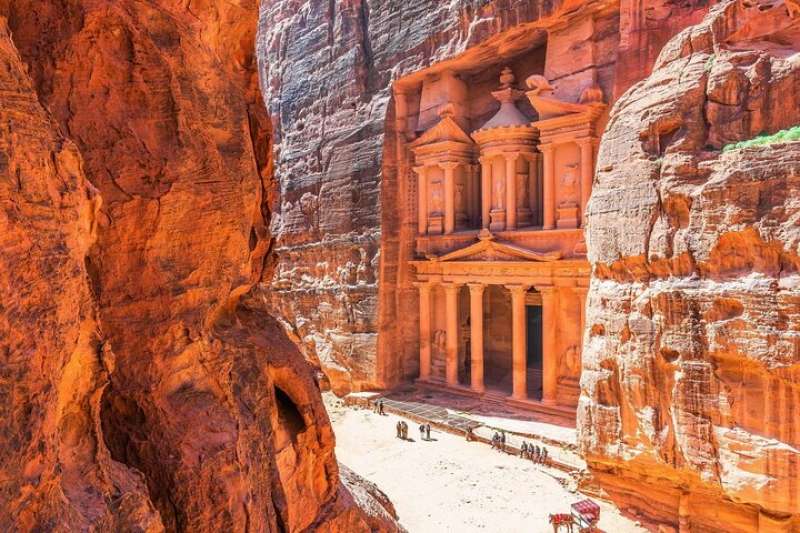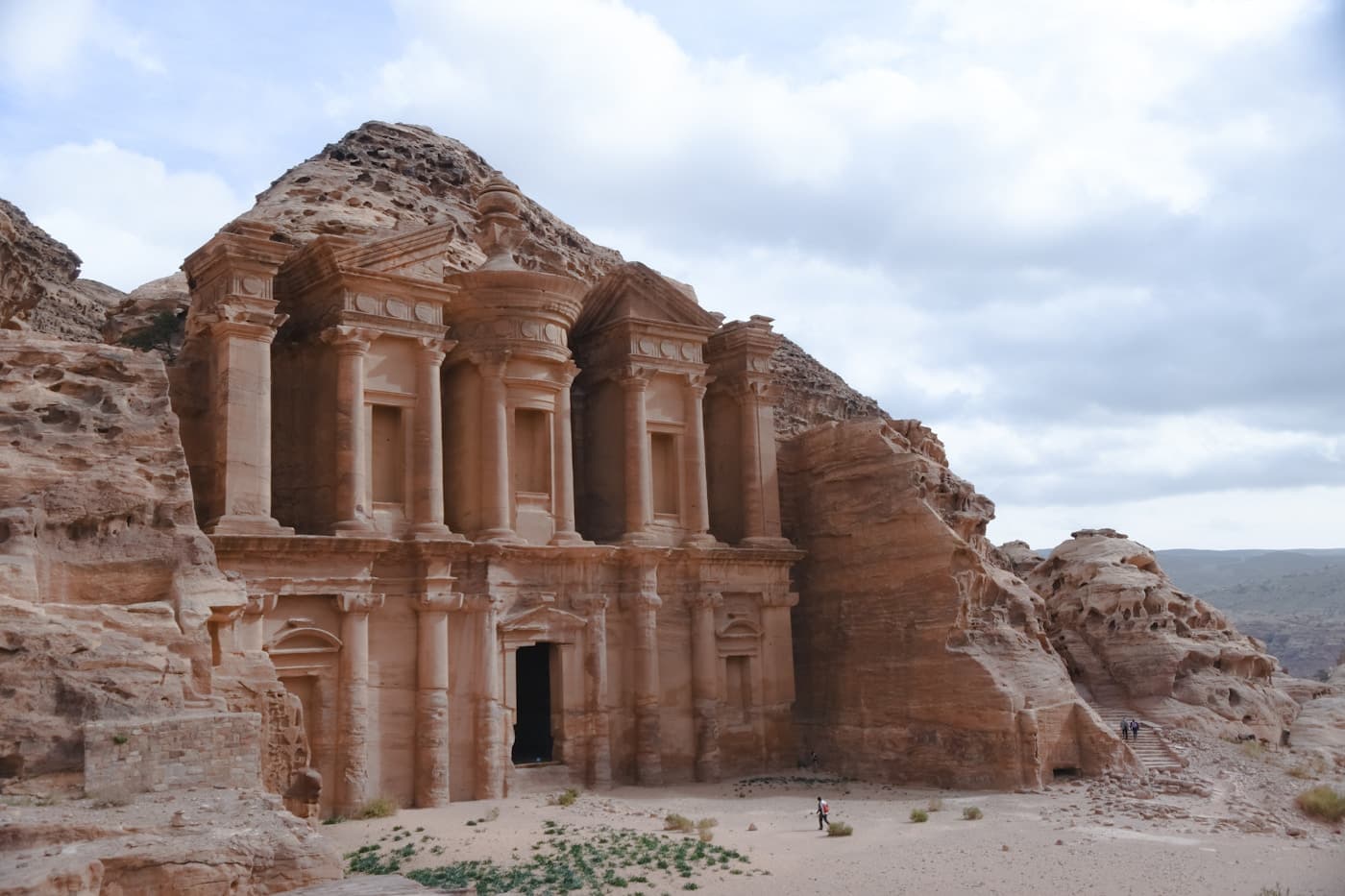
Carved into rose-red sandstone cliffs by the Nabataean people over 2,000 years ago, Petra is one of the world's most extraordinary archaeological sites. The journey begins in the Siq — a narrow, winding canyon that suddenly opens to reveal the iconic Treasury, its carved facade glowing in the desert light. Beyond the main monuments lies a vast landscape of royal tombs, colonnaded streets, and ancient water channels, most of it still unexplored. A full day here barely scratches the surface.
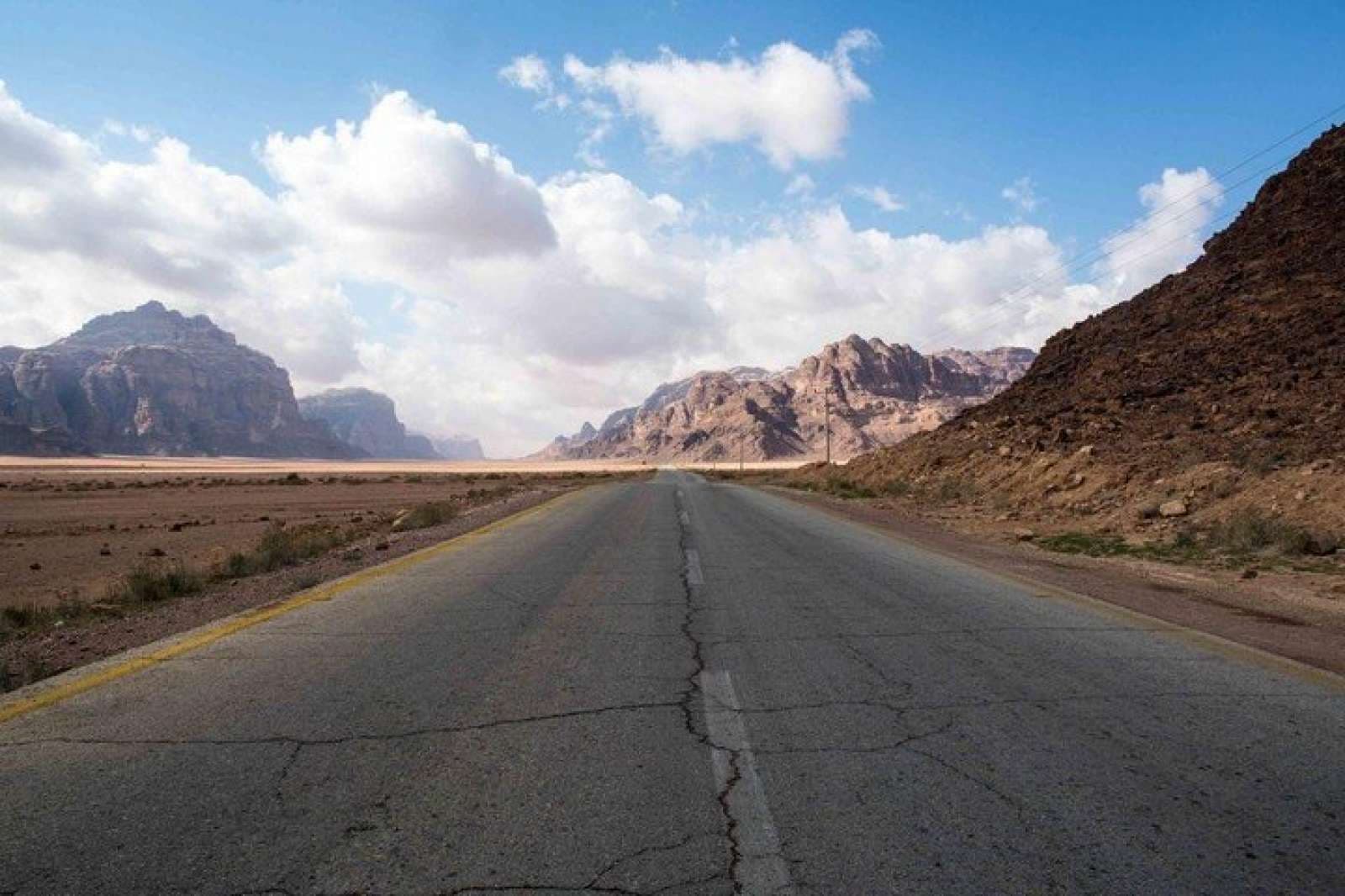
Petra is about three hours by road from Amman (225 km) via the Desert Highway, roughly two hours from Aqaba, and under two hours from Wadi Rum — which is why most multi-day itineraries link the two together. There's no train or scheduled bus worth the time; a private driver or your tour vehicle is the practical option.
March to May and September to November are the sweet spot — daytime highs sit in the low-to-mid 20s°C and the light through the Siq is best in the morning. July and August regularly hit 38-40°C by midday, which makes the walk back from the Monastery rough. Winter (December-February) is cool and occasionally rainy, with the Siq at its quietest.
Petra opens at 6am, and getting there for opening beats the tour-bus crowds by a couple of hours. It's about 800 metres of flat walking from the entrance to the Treasury, then another 800 steps if you continue up to the Monastery — wear shoes you can actually hike in, not sandals. Horse and camel rides are offered along the way but aren't included in the entrance ticket; agree on a price before you get on. Bring more water than you think you need.
Quick Questions
Petra is in southern Jordan, in Ma'an Governorate, about three hours by road from Amman.
Jordan. It's the country's single most famous site and one of the New Seven Wonders of the World.
About 120 km, roughly a 1.5-2 hour drive — most multi-day itineraries link the two together for exactly that reason.